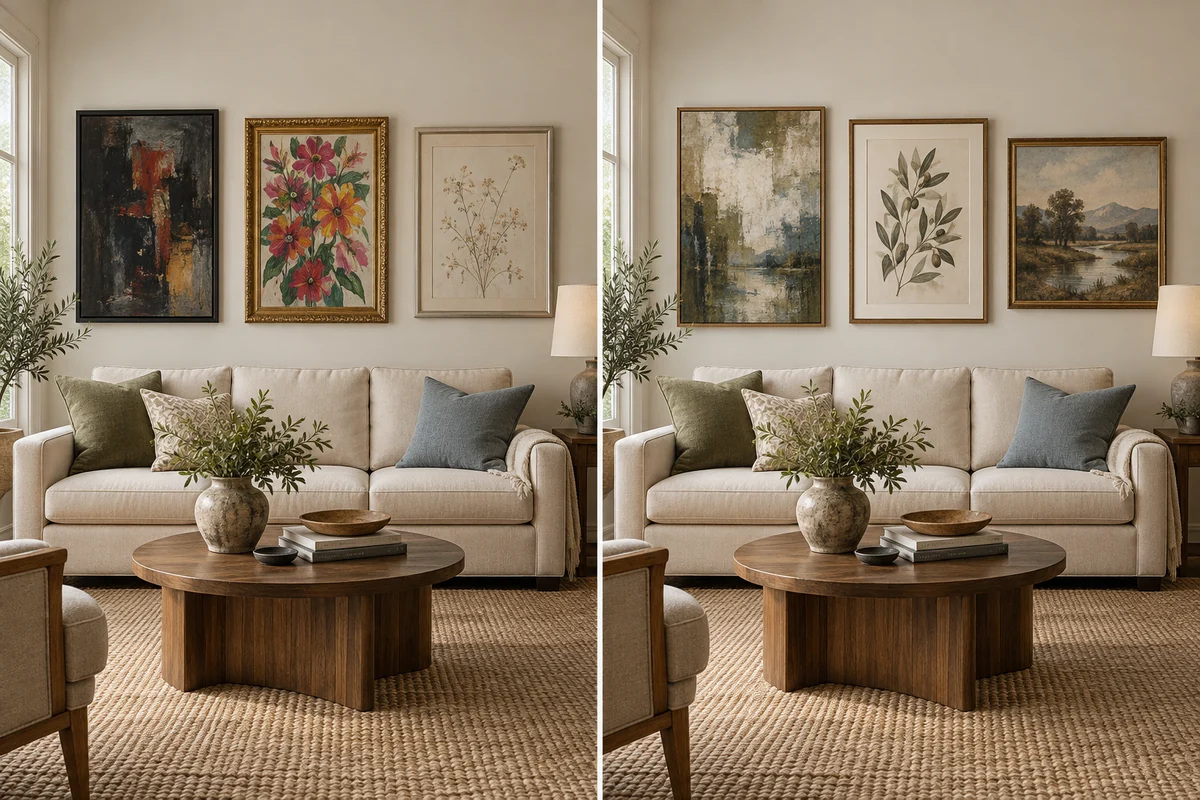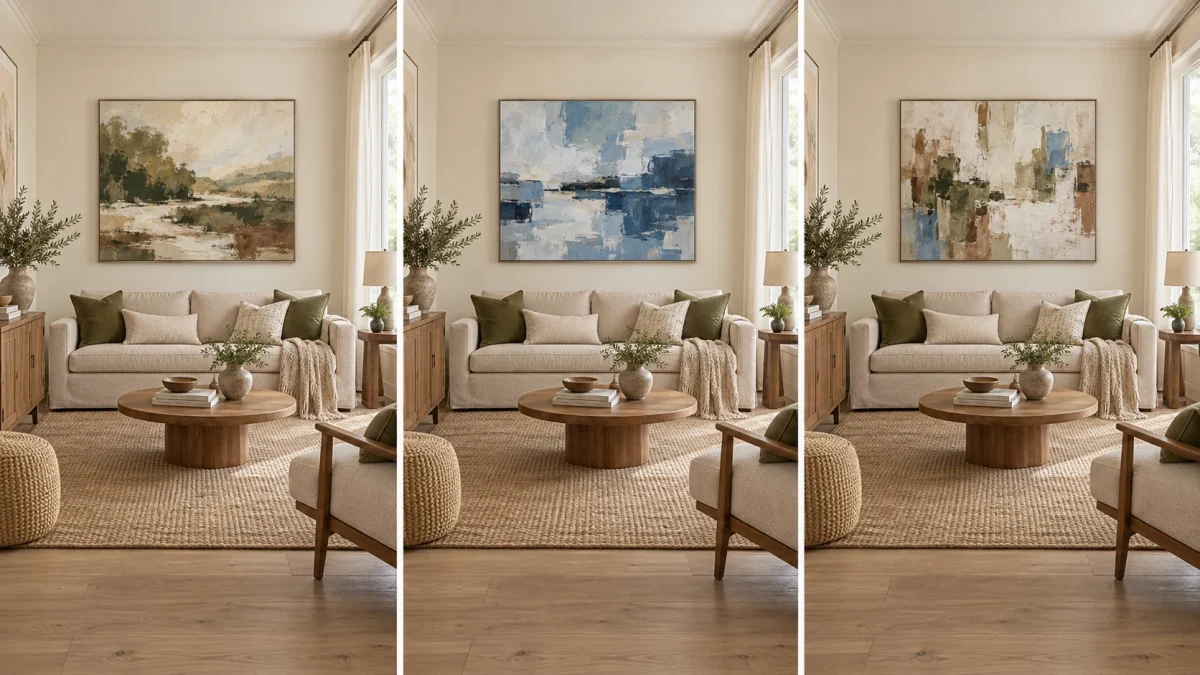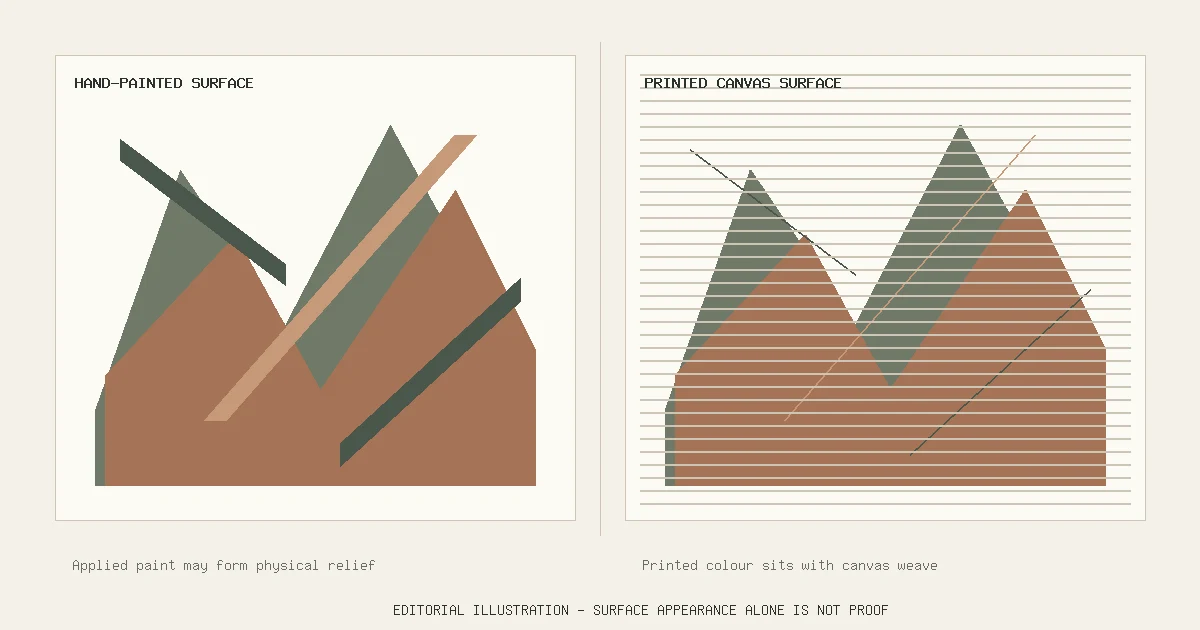
Neither option is automatically better. Choose a framed oil painting when you want a stronger visual boundary, more wall presence, and added protection around vulnerable canvas edges and corners. Choose unframed when the specific artwork is supplied in a display-suitable form and you want the painted surface to relate more directly to the wall. Before deciding, confirm what unframed means on that product page: a stretched canvas and a rolled canvas require very different next steps. At Room Oil Painting, the option means no decorative outer frame, but construction details can vary by artwork. A frame can also increase the finished outer dimensions, so measure the complete selected configuration rather than relying only on the listed canvas size.
How This Framing Guide Was Prepared
This guide combines current Room Oil Painting product configurations with published framing and conservation guidance and the questions buyers encounter in current search results. Product names, canvas sizes, frame labels, and configuration images were checked against the live listings before publication. Conservation statements are based on Canadian Conservation Institute guidance; broader buyer context was reviewed separately. We did not assume that every use of “unframed” means gallery-wrapped, rolled, or ready to hang. Where a listing does not document edge treatment, hardware, finished framed dimensions, or physical weight, this guide tells you to verify those details rather than inventing a universal rule.
Quick Decision
- Choose framed when you want a clear border, a more finished outer presentation, and additional protection around exposed edges during handling.
- Choose unframed when the listing confirms a suitable stretched construction and you prefer a smaller visual footprint with no decorative outer border.
- Check before ordering when the listing does not clearly state whether the canvas is stretched or rolled, how the edges are finished, what hanging hardware is included, or how much a frame changes the outside dimensions.
What “Framed” and “Unframed” Actually Mean
A decorative outer frame is the visible border added around a painting. The stretcher bars are the inner support over which canvas is tensioned; they may be present even when no decorative frame is visible. These two structures are not interchangeable, although online listings sometimes use the word “frame” for both.
A gallery wrap is a stretched canvas whose edges are intentionally suitable for display. The image may continue around the sides, or the sides may have another deliberate finish. A rolled canvas is not stretched over bars and normally needs stretching, mounting, or another preparation before ordinary wall display. “Unframed” alone does not tell you which of these you are buying.
For current Room Oil Painting listings, Unframed means the product selection has no decorative outer frame. Chromatic Symphony documents a 3.5 cm solid-wood inner stretcher/support, and Dawn Glow states that its oil canvas is supported by a solid-wood inner stretcher. They are therefore stretched canvases without the selected decorative outer frame. Other listings do not document every construction detail or edge treatment to the same level. Unframed presentation can vary by artwork; check the individual product configuration before ordering.
Important: do not assume that an Unframed option has painted gallery-wrap edges, arrives with hanging hardware, or is ready to hang unless the individual listing says so. Likewise, do not assume it is rolled canvas unless that is explicitly stated.
Framed vs. Unframed: Side-by-Side Comparison
| Factor | Framed | Unframed |
|---|---|---|
| Visual boundary | A visible outer border separates the image from the wall | The painted surface relates more directly to the wall |
| Wall presence | Usually reads as a larger, more defined wall object | Usually reads as a lighter outline around the same canvas |
| Finished dimensions | Outer dimensions may exceed the listed canvas size | Usually closer to the canvas dimensions when already stretched |
| Edge protection | Can reduce direct contact with vulnerable edges and corners | Edges remain more exposed during handling and display |
| Weight | The added frame changes total weight; verify the finished configuration | May weigh less, but do not assume without product data |
| Handling | The frame provides a boundary to hold, but careful handling is still required | Requires extra care to avoid touching paint, canvas edges, or the back |
| Hanging | Hardware must suit the finished framed weight and construction | Display depends on whether the canvas is stretched and what hardware is supplied |
| Best wall context | Useful where a clear border or stronger separation is wanted | Useful where the painting can meet the wall without another finish |
| Future flexibility | The chosen finish becomes part of the immediate presentation | A compatible decorative frame may be added later after fit is checked |
How a Frame Changes the Painting’s Visual Weight
Visual weight is not the same as physical weight. It describes how strongly the painting occupies the wall. Add a frame to the same canvas and three things usually happen: the complete footprint becomes larger, the edge becomes more deliberate, and the image gains separation from the wall colour. A dark or strongly contrasting profile can make that boundary especially clear. A quieter finish can still define the painting without dominating it.
This is why “framed equals traditional” and “unframed equals modern” are unreliable shortcuts. A contemporary abstract can work with a restrained outer frame, while a landscape can work without one if its stretched construction and edge finish are suitable. Room style is one factor; composition, edge activity, wall colour, nearby furniture, and the available frame finish matter too.
Judge the selected configuration at the distance from which you will normally see it. From across a room, the frame may read as part of the silhouette. Close up, the relationship between the painted edge and the frame finish becomes more noticeable. For scale planning beyond the frame decision, use the oil painting size guide.
Canvas Size vs. Finished Framed Size
The canvas dimensions and the finished framed dimensions are two different measurements. If a listing offers an 80 x 120 cm canvas, that number describes the artwork size unless the page explicitly says it is the complete outer measurement. Adding a decorative frame can increase both width and height. The amount depends on the actual profile, spacing, and assembly, so this guide does not apply a made-up “plus 3 cm” or “plus 5 cm” rule.
- Identify whether the displayed size is the canvas measurement or the complete framed measurement.
- Select the frame option before final wall planning.
- Ask for or check the finished outer dimensions of that exact configuration.
- Mark the complete outline on the wall, including the frame, and check nearby furniture, switches, sconces, curtains, and door clearance.
- Confirm that the packaged and finished piece can reach the room through doors, lifts, stairs, and hallways when the artwork is large.
When the product page does not publish the finished framed dimensions, treat them as information to confirm before ordering rather than estimating from a gallery image. Mockups show proportion, but they are not measurement drawings.
What a Frame Actually Protects
A suitable frame is more than decoration. The Canadian Conservation Institute explains that a frame can help protect vulnerable parts of a painting from direct handling and can add rigidity that reduces some handling risk. For a canvas, this is most relevant around edges and corners, where hands, walls, packaging, or nearby objects can make contact.
A frame does not make a painting immune to impact, pressure, humidity, heat, sunlight, dirt, or poor mounting. It does not turn an ordinary display system into an archival enclosure. A badly fitted or inadequately supported frame can create its own risks. The painting should be held securely without pressing on the painted face or being forced into a frame that is too tight.
What about glass or acrylic?
It is too absolute to say that oil paintings should never be glazed. In some settings, glass or acrylic can provide useful physical, dust, pollutant, or environmental protection. If glazing is used, the Canadian Conservation Institute states that it must not touch the paint surface; an appropriate spacer and sufficient frame depth are needed. Glazing also changes reflection, weight, cleaning, and breakage considerations. The current Room Oil Painting options discussed here do not list glazing as a purchase choice, so this is general framing context, not a description of the products shown below. Ask an experienced framer or conservator when a vulnerable surface or higher-risk location may require a specialist solution.
When an Unframed Oil Painting Works Well
An unframed presentation can work well when the canvas is already stretched, its sides are intentionally suitable for display, and the absence of an outer border supports the composition. It can keep attention on brushwork and colour, reduce the visual footprint around the canvas, and leave the buyer free to consider a compatible frame later.
It is particularly useful when a wall zone is tight and even a modest border would make the complete piece feel crowded. It can also suit an energetic painting whose edge already feels complete against the wall. These are visual reasons, not automatic construction guarantees.
Before choosing it, inspect the current configuration image and confirm the support, edge finish, depth, rear hardware, and display instructions. If the product is rolled rather than stretched, the decision is not simply framed versus frameless: stretching or mounting is still required. If the edges are unfinished or the staples are visible, a decorative frame may be the more coherent final presentation.
When a Frame Makes More Sense
Choose a frame when the painting benefits from a deliberate boundary, when you want it to separate clearly from the wall, or when the location exposes the edges to more handling. A frame can help a small canvas claim more presence, make a large composition feel visually contained, or connect the painting to an existing material in the room.
A framed option is also practical when you prefer to receive the painting in its intended outer presentation rather than source a compatible frame later. That convenience still depends on the listing: check what is included, how the painting is mounted, whether hanging hardware is supplied, and the finished weight and dimensions. For a hallway, entry, dining area, or other location where people may pass close to the work, the added boundary around corners and edges may be useful, although it cannot prevent all contact or damage.
Real Framed and Unframed Examples From Our Collection
The examples below use current product configurations and images, not generic substitutes. Each pair shows the same established artwork with and without one of its available decorative outer frames. Configuration images are visual references; they are not customer-home photographs, and they do not establish an exact outside measurement.
Chromatic Symphony: a documented stretched Unframed option
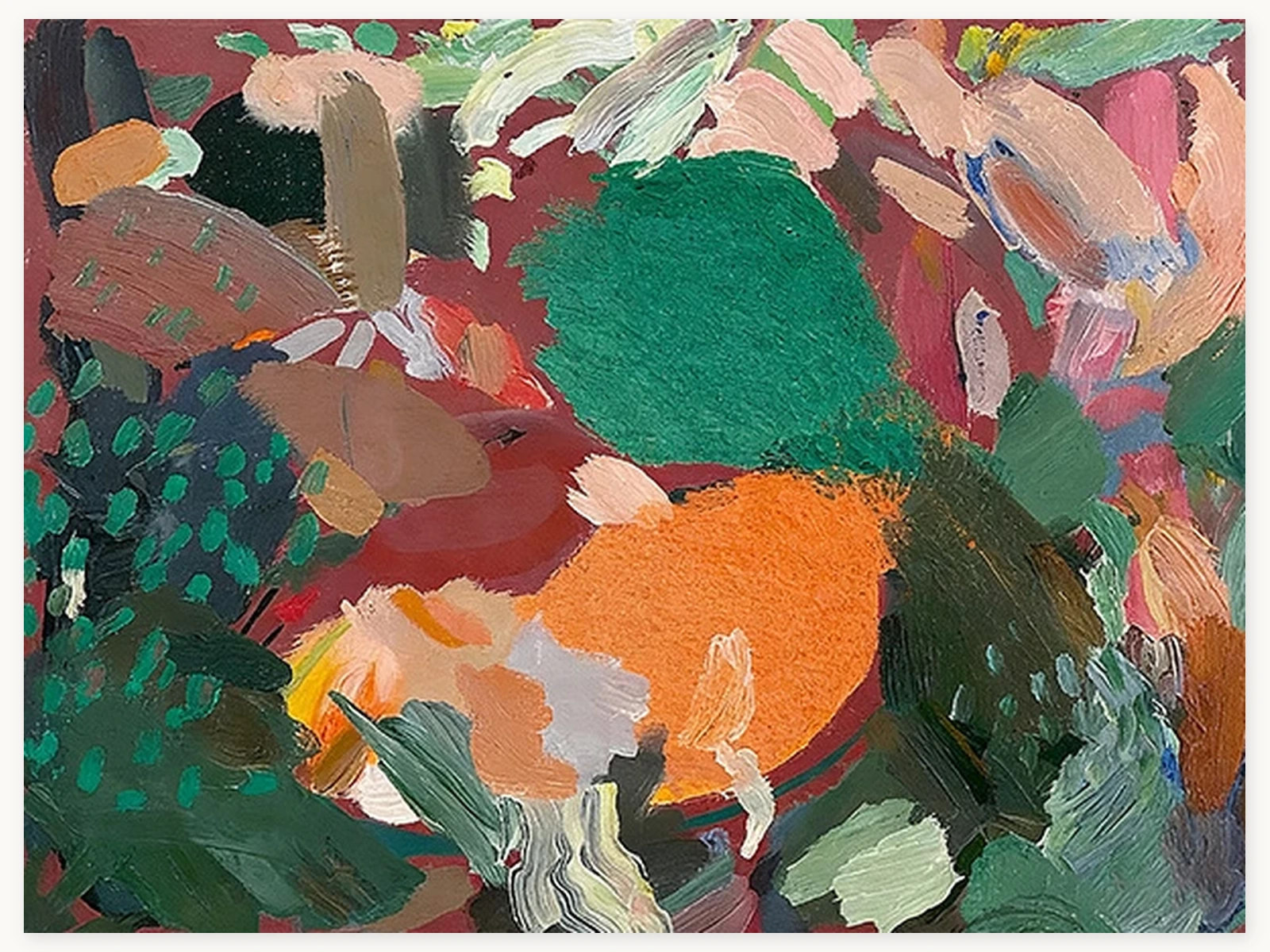
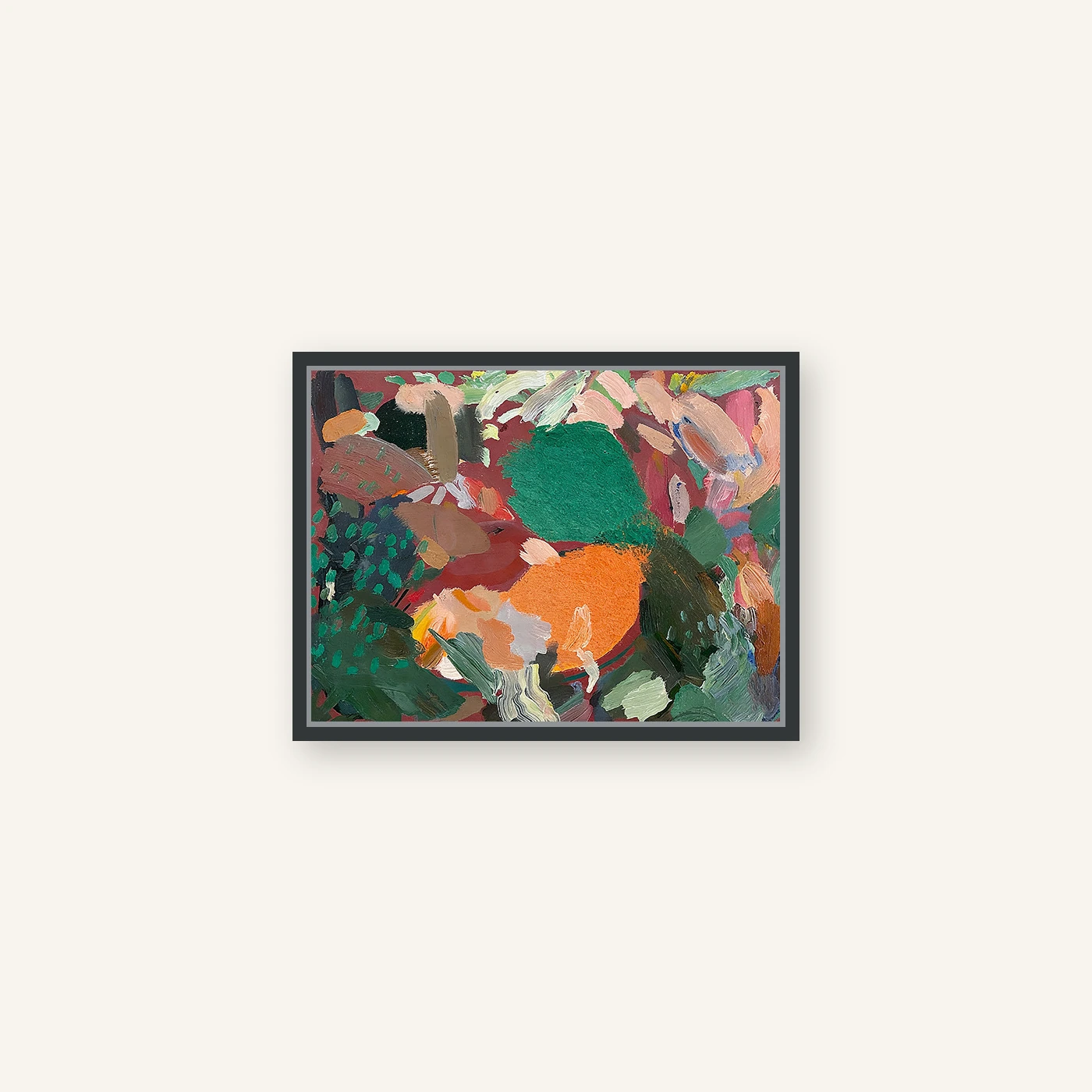
Chromatic Symphony is a horizontal abstract offered in six canvas sizes, from 60 x 80 cm to 120 x 160 cm. Its current listing offers Unframed, PS Frame, Aluminium Alloy Frame, and Walnut-Finish Frame. The product data documents a 3.5 cm solid-wood inner stretcher/support, so its Unframed choice is a stretched canvas without the selected decorative outer frame—not a loose roll of canvas.
The composition, canvas size, and colour relationships remain the same when a frame is selected. What changes is the visible outer boundary, the finished footprint, physical weight, and how the work separates from the wall. The wide format makes the outside-width check particularly important above a sofa, console, or dining table.
Dawn Glow: a square canvas with an inner stretcher


Dawn Glow is a square sunrise landscape offered in seven sizes, from 60 x 60 cm to 120 x 120 cm. Its current choices are Unframed, PS Frame, Aluminium Alloy Frame, and Walnut-Finish Frame. The listing states that the oil canvas is supported by a solid-wood inner stretcher, confirming that the Unframed selection is stretched rather than rolled.
With a square work, a decorative frame increases width and height together and makes the silhouette more pronounced. The painted sunrise and square composition do not change. A warm Walnut-Finish Frame can create a stronger material relationship with timber furniture, while the Unframed option keeps the edge visually quieter. Neither choice is automatically more suitable; check the final outside dimensions and the exact edge and hanging information for the selected configuration.
Quiet Earth: compare the boundary, but verify the edge details
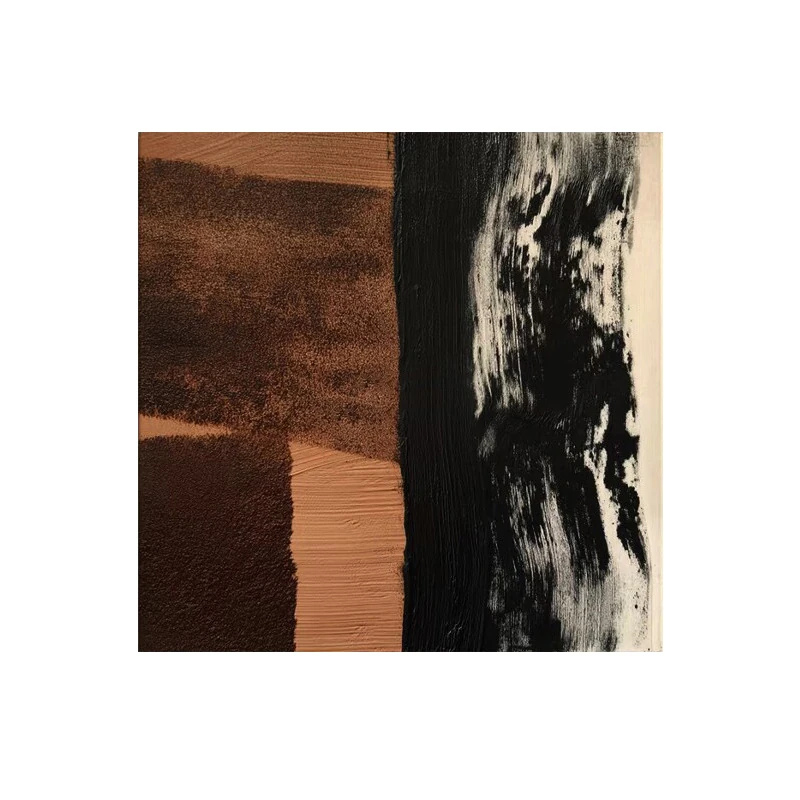
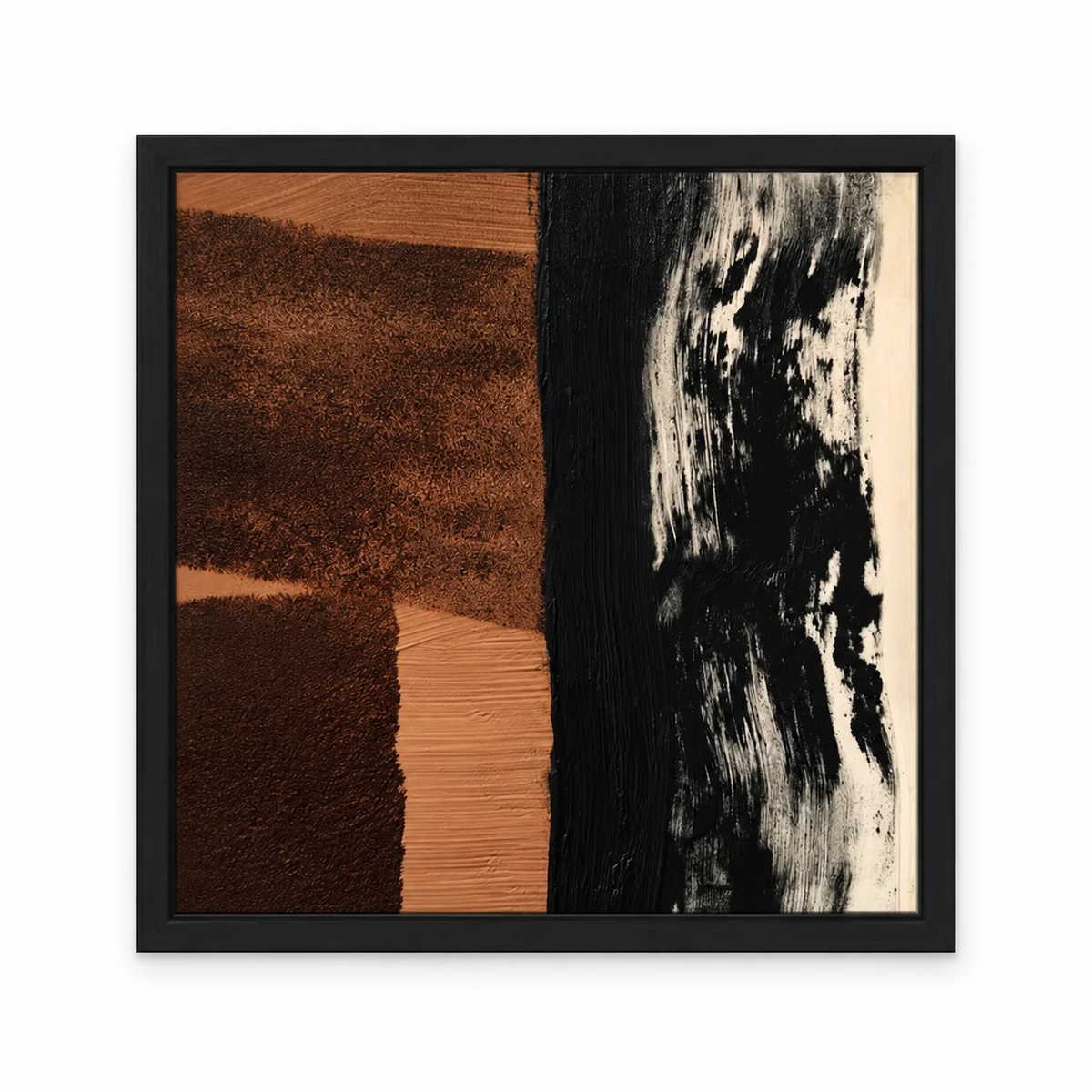
Quiet Earth is a square abstract offered in nine sizes, from 60 x 60 cm to 160 x 160 cm, with the same four current frame labels. Its configuration images make the visual difference easy to compare: the PS Frame creates a defined dark boundary, while the Unframed image leaves the painted composition without that decorative border.
The current listing does not document the Unframed edge treatment and inner support as explicitly as the two examples above. For that reason, this guide does not call it gallery-wrapped, claim that the edge is painted, or promise that it is ready to hang. Confirm those construction and hardware details before ordering. This is the practical difference between using first-party images as evidence and inferring details the images cannot prove.
How Frame Finish Changes the Room
The current products above offer PS Frame, Aluminium Alloy Frame, and Walnut-Finish Frame in addition to Unframed. Those are the labels verified on the live product pages. “PS Frame” is not described here as solid wood, and none of these options is called a museum-standard floater frame because the current product data does not support those claims.
- PS Frame: use the live configuration image to judge its darker, more graphic boundary. It may sharpen contrast around pale or earth-toned passages.
- Aluminium Alloy Frame: its visually restrained metal profile can relate to other metal details in a room without requiring the painting to be “modern.”
- Walnut-Finish Frame: the warmer finish can connect with timber furniture and warm neutral materials. “Walnut-finish” describes the listed finish, not a claim that the frame is solid walnut.
Frame finish is an aesthetic decision; edge and corner protection is a structural one. A walnut appearance does not protect better than a metal appearance merely because of its colour. Compare the visual result first, then separately confirm fit, construction, finished size, weight, and hanging requirements.
Handling and Hanging Differences
A decorative frame gives handlers an outer structure to hold, but the painting still requires care. Avoid touching the painted surface or pressing on the back of the canvas. A frame can add physical weight and alter the balance of the complete piece, especially at larger sizes. The correct wall fixing therefore depends on the finished configuration, wall material, hardware, and weight—not only on the canvas dimensions.
For an Unframed choice, confirm that the canvas is stretched, that the sides are suitable for the intended display, and that appropriate rear hardware is present. “No decorative frame” does not itself mean “ready to hang.” For either option, do not improvise a fixing for a large work or rely on a generic weight rating without checking the wall and finished artwork.
Which Should You Choose?
| Choose Framed If… | Choose Unframed If… | But Check First If… |
|---|---|---|
| You want a clear visual border around the composition | You prefer the painted surface without a decorative outer border | “Unframed” is not defined as stretched or rolled |
| Your wall has enough room for the finished outer dimensions | Your wall zone is tight and the canvas itself fits comfortably | The finished framed dimensions are not published |
| You prefer one of the currently offered frame finishes | The documented edge treatment works with your room | The side finish cannot be seen clearly |
| You want an added boundary around vulnerable edges during handling | The location is low risk and you can handle exposed edges carefully | The painting will be in a busy passage or near repeated contact |
| You want the complete presentation selected before delivery | You may add a compatible frame later after checking fit | Hardware, finished weight, or mounting method is not stated |
Frequently Asked Questions
Do oil paintings need to be framed?
No. A frame is a presentation and handling choice, not a universal requirement. A stretched canvas with deliberately finished edges may be suitable for display without a decorative outer frame. Rolled canvas still needs stretching, mounting, or another preparation before ordinary hanging. Check the construction, edge treatment, hardware, finished size, and display location of the specific painting before deciding.
What does unframed canvas mean?
At Room Oil Painting, Unframed means no decorative outer frame. It does not automatically mean rolled canvas, gallery wrap, painted edges, or ready to hang. Chromatic Symphony and Dawn Glow explicitly document an inner stretcher/support, so those two Unframed options are stretched rather than rolled. Where a listing gives less construction detail, confirm the support, edge finish, depth, and included hardware before ordering.
Does a frame make an oil painting larger?
It makes the complete object larger even though the painted canvas and composition do not change. The amount added to the width and height depends on the actual frame profile, spacing, and assembly. Treat the listed canvas size and the finished outer size as separate measurements, and check the completed dimensions of the selected configuration before marking the wall.
Does framing help protect an oil painting?
Yes, within limits. A suitable frame can reduce direct handling of vulnerable edges and corners and can add rigidity during handling. It does not prevent every impact, environmental change, dust problem, or mounting error. Fit, backing, wall placement, careful handling, and suitable hanging hardware still matter, and a poorly fitted frame can introduce new risks.
Can an oil painting be displayed behind glass or acrylic?
It can be appropriate in some environments, but the glazing must not touch the painted surface. A suitable spacer and enough frame depth are required, and the complete assembly must account for reflection, weight, cleaning, and breakage risk. The Room Oil Painting products discussed here do not currently list glazing as a purchase option, so specialist advice may be useful for a vulnerable surface or higher-risk location.
Can I frame an unframed canvas later?
Often, yes, when the canvas is stretched, stable, and compatible with the proposed frame. Confirm the support depth, edge condition, exact dimensions, and mounting method before buying a frame. A rolled canvas needs a stretching or mounting decision first, while a fragile, unusually textured, or damaged surface may need assessment by an experienced framer or conservator.
Sources & Further Reading
- Source: Canadian Conservation Institute. Page: Basic care – Paintings. Supports: handling, frame support, environmental risks, and safe glazing separation.
- Source: Canadian Conservation Institute. Page: Framing a Painting – CCI Notes 10/8. Supports: preventive framing, fit, support, glazing, and spacing guidance.
- Source: JetPrint. Page: Framed vs. Unframed Canvas Art. Supports: current commercial terminology and common buyer comparison points; conservation claims in this guide rely on CCI.
Compare the Painting and Presentation Together
Start with the artwork you want, then compare only the frame choices and construction details available for that listing. Measure the complete configuration, confirm what Unframed means, and choose the boundary that works with both the painting and your wall.